 In today’s highly competitive business environment, businesses need to do everything they can to operate more efficiently and be as lean as possible. Cloud computing is a potential solution for multiple types of businesses. It allows users to outsource their data storage systems into the cloud, which creates better security and facilitates internal file sharing across multiple devices at once.
Cloud Computing vs. Cloud Storage
Cloud computing is when your business outsources its data processing to a third party that has better technology than what you could use in-house. This option is becoming increasingly popular in tech-savvy businesses. It delivers scalable technology that can adapt to changes in your company’s needs.
Cloud storage is when your business outsources its data storage to a third party, which can be useful for businesses with large amounts of files and data. This option also lets multiple users access the same file at once from different locations.
How Cloud Increases Efficiency and Security for Small/Mid Size Businesses
In business, efficiency is key. When you have more things automated in your company, it speeds up workflow and can help cut down on manual errors. As more companies are becoming aware of the benefits of cloud computing, all sorts of new possibilities have emerged for businesses. For example, consider what happens when a business without an IT department purchases office software from a provider in the cloud. There’s no need to hire an expensive contractor to set up servers and install the software. Companies can now access their software from any location that has an Internet connection, which also makes it easier to work from home or on the go.
The Security of Your Data and Privacy in The Cloud
With cloud computing, businesses don’t have to worry about maintaining their own servers and networks—that’s taken care of by the cloud provider. It’s important to note that, when it comes to business security, suppliers are responsible for managing data encryption and protecting your company’s information. However, if your company stores personal data in the cloud (for example, sensitive medical or financial records), you may need to take additional steps like encrypting this type of data yourself before uploading it to the cloud.
This only applies if you are using 3rd party software on your computer with its own encryption method which can be turned on or off by the user. Cloud based solutions that are built into Operating Systems, Email Programs etc. encrypt all data at rest and in transit by default with full key management being done by the built in encryption software.
You can also be diligent about reviewing your cloud providers’ security policies and procedures to make sure they’re a good fit for your company’s business needs.
Other Security Considerations When Using Cloud Computing
There are some security risks associated with the use of certain cloud computing models, such as Infrastructure-as-a-Service (IaaS). For example, a company’s data transmissions might go through a public network or internet connection which can be more susceptible to security risks. Similarly, the virtual machines and storage containers created by IaaS use public networks for processing and storage, so they have similar vulnerabilities. In both situations, it’s important that employees understand the security risks and know how to avoid them.
Some cloud computing security issues and challenges include:
– Data location: If your company stores its data in a different country, it may fall under the protection of that nation’s laws and surveillance programs. Also, you may need to comply with applicable business regulation for this jurisdiction.
– Data sovereignty: Sometimes businesses store their data on servers located outside of their home country. This can lead to legal concerns, including issues with maintaining privacy and avoiding government surveillance.
– Data ownership: Even if your company stores its data in the cloud, it still owns the data. It’s important to understand how this works for your particular situation so you can properly maintain ownership of your data. For instance, do you only own the copy on the server, or do you own copies on all of your business’s devices?
– Data access: If company employees need to upload large files (like video footage), it can be challenging if the internet service is slow or not readily available. Be prepared for this issue by having a high-speed Internet connection in place before beginning the migration process.
All in all, when you ask yourself, “How secure is cloud storage?”, you want to remember that providers are responsible for properly securing your data. Like nearly all security measures, it’s important to be diligent about finding the service that best fits the needs of your company and enforcing good cloud security practices with employees.
More importantly, the pros of cloud technology far outweigh the cons. It can level the playing field for businesses of all sizes, because it allows them to access information from anywhere, anytime. It also makes teams more efficient because everyone has secure access to the same data and programs at all times.
Sunvera Software develops next-level software applications from start-to-finish. We are a premier software and mobile app development agency specializing in healthcare mobile app development, custom mobile app development, telehealth software, sales dashboards, custom mobile app development services, retail software development, supply-chain software, ecommerce, shopify, web design, iBeacon apps, security solutions and unified access software.
We are proud partners with Amazon AWS, Microsoft Azure and Google Cloud.
Schedule a free 30-minute call with us to discuss your business, or you can give us a call at (949) 284-6300.
 The security of commercial software, especially open source and third party software, has been an issue since the beginning of large‐scale computing. Even with the best intentions it is possible for a developer to introduce vulnerabilities in their code which can be exploited by attackers. This problem has become more prevalent as business processes focus on integrating application components provided by many different suppliers. The need for finding, managing, controlling and securing these components have become significant challenges in today’s software development life cycle.
 One of today’s worst phobias is getting hacked. That’s because not only are we at risk, but the companies and institutions that have our most vital data as well, from banks to big government—we’re vulnerable no matter what we do. All the protection in the world might not prevent our information from getting stolen out of businesses and corporations whose security systems have been compromised and whose data have been breached.
 The technology world is ever-changing with new concepts and advancements being made every day. Businesses that place an emphasis on their tech stack are more likely to succeed in this new age of technology. This is due to the fact that they can adapt more quickly instead of waiting around for someone else to solve problems or make improvements.
 Artificial intelligence (AI) and machine learning applications are no longer a part of the future. They’re here now and they’re already revolutionizing businesses all over the world, helping to increase effectiveness and efficiency. The role of AI in business is therefore fundamental to the ongoing success of a large number of enterprises.
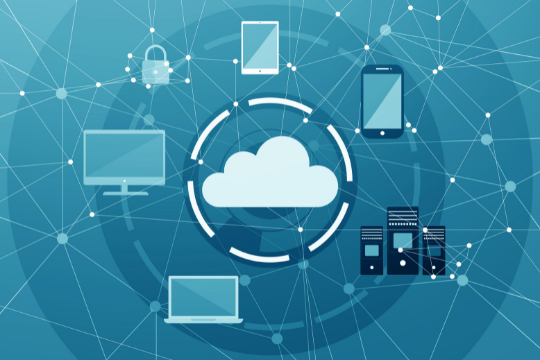 The cloud computing vs distributed computing debate has been ongoing, and although there are similarities between the two, there are also important differences, with each one offering vital benefits to businesses and companies.
 Computer security has evolved over the last few decades. As computers have become more prevalent, virus and malware creators have created new forms of viruses that plague systems worldwide. Antivirus software was developed to combat these issues, but it is no longer capable of protecting users’ machines, which has led to security professionals developing their own custom security software to combat malware and virus invasions.
 Custom security solutions are a must-have for small and mid-sized businesses. Thieves are more sophisticated than ever before, and even a timely security solution won’t be able to stop them every time. With an approach customized for your business’ needs, you can feel more confident that you’re protected against current threats proliferating the internet today.
 The mobile sector is booming with a large number of apps being created every day. As a result, there has been a race to make the best mobile apps accessible to all users across different devices. Implementing AI for mobile app accessibility has become a huge part of the process. These tools can be used by app developers and website developers alike to make sure that people with physical impairments can still enjoy the benefits of today’s state-of-the-art applications.
 Speech Recognition was once regarded as a gimmick and has come a long way since the days of Star Trek’s “computer”. More than ever, AI and new speech recognition technologies allow an app developer to add rich, powerful voice-activation capabilities to apps.