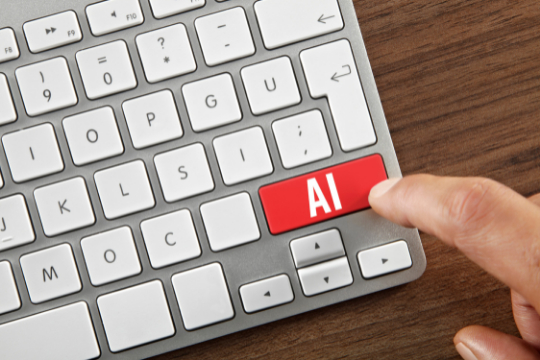
 Today artificial intelligence (AI) is all around us: from the ads that Facebook shows you to Google Translate or self-driving cars. Virtual assistants such as Siri and Alexa are starting to feel very natural and human.
What we see today is just the tip of the iceberg. Underneath it there is a shift happening, moving us towards Artificial General Intelligence (AGI), the point where machines start to think like humans. AGI will change our lives more than any technology before.
To make this future happen we need better AI algorithms. Google’s AutoML project is one example showing how neural networks can be used to design better neural networks. Other projects are using evolution or complex systems theories to give machines access to more knowledge and help them think in ways similar to humans.
What is Generative AI?
Generative AI is a subfield of machine learning that deals with the generation of new data. It differs from other subfields such as reinforcement learning or deep learning, which are more focused on learning from data. Generative AI algorithms are used to create new data, for example, images, text, or sounds.
Why is Generative AI Important?
There are many reasons why generative AI is important. First, it can be used to create data that does not exist yet. This is important for research purposes, for example when a new algorithm needs test data to train on.
Second, generative AI can be used to improve existing algorithms. For example by creating data for training new neural networks or evolving better deep learning architectures. Third, generative AI can be seen as an automated machine learning technique: a machine that designs better machines. The implications of this are much bigger than improving existing algorithms!
10 Use Cases for Generative AI
Here are 10 use cases for generative AI, covering a wide range of tasks. There are many more applications where generative AI can be used to create better AI algorithms, so this is just the beginning!
1. Algorithm Invention
One application of generative AI is to help researchers invent new machine learning algorithms. This process has so far been done mostly by hand, but with the help of generative AI, it can be automated.
2. Data Augmentation
Data augmentation is a technique used in machine learning to improve the quality of data. It consists in artificially augmenting the data set with additional data that is similar to the original data set but that has not been seen before. This is often used in deep learning to improve the performance of neural networks.
3. Neural Network Design
Neural networks are modeled after the brain and consist of a large number of interconnected neurons. The connections between neurons can be changed (or “tuned”) to adapt the network to a specific task. This process is called training and is done using a large amount of data. Generative AI can help with the task of tuning the neurons, for example by automatically finding the best set of connections.
4. Data Synthesis
One application of generative AI is to generate data that is not available in the real world. This can be used for research purposes, for example, to test new machine learning algorithms or deep learning architectures.
5. Text Generation
Text generation is the process of automatically creating text documents. AI text generators can be used to create summaries of articles, generate product descriptions, or write blog posts.
6. Image Generation
Another application of generative AI is to generate images. This can be used to create new images for research purposes or to generate realistic images that can be used in computer graphics applications.
7. Music Generation
Generative AI can also be used to generate music. It is even possible to use generative AI algorithms to listen to the generated music and find the parts they like most, which is similar to using Pandora or Spotify! This can be used to create new music or improve the existing music experience.
8. Artificial Creativity
Artificial creativity is a subfield of generative AI where the main goal is not about generating new data but rather about creating something that didn’t exist before. For example, generating an abstract painting or a novel story without human input.
9. Creative Question Asking (CQA)
Creative question asking (CQA) is a form of machine learning where the goal is not to answer questions but to ask them creatively and improve future generations by incorporating previous answers into later generations.
For example, using Smart Reply in Gmail to generate better auto-complete suggestions.
10. Artificial General Intelligence (AGI)
Artificial general intelligence (AGI) consists of algorithms that can successfully perform any intellectual task a human being can do. Humans have used tools for thousands of years to solve problems and create new things. Now we need to automate this process as well! Generative AI is an important step towards building AI that can design better machine learning algorithms and other forms of AI!
Industries That Can Benefit Most From Generative AI
The image recognition industry is one area that can benefit greatly from generative AI. With the help of generative AI, we can create more realistic images that are closer to what the human eye sees. This will improve the accuracy of image recognition algorithms and enable new applications such as automatic photo editing and realistic 3D rendering.
Another industry that can benefit from generative AI is the text generation industry. By using generative AI, we can create text documents that are more realistic and accurate. This will improve the quality of text-based products such as chatbots, machine translations, and search engines.
Last but not least, the gaming industry can also benefit from generative AI. We can use generative AI to create more realistic and polished games with better artificial creativity, more expansive worlds, and richer stories.
Final Thoughts
Generative AI is already being used in many different areas of industry, including video games, text generation, and image recognition. There are many other applications for generative AI that can improve existing products and create new ones.
There are also plenty of future applications that haven’t yet been developed but will surely change the way we work and live in the years to come!
Sunvera Software develops next-level software applications from start-to-finish. We are a premier software and mobile app development agency specializing in healthcare mobile app development, custom mobile app development, telehealth software, sales dashboards, custom mobile app development services, retail software development, supply-chain software, ecommerce, shopify, web design, iBeacon apps, security solutions and unified access software.
We are proud partners with Amazon AWS, Microsoft Azure and Google Cloud.
Schedule a free 30-minute call with us to discuss your business, or you can give us a call at (949) 284-6300.
 For every single business, using project management software is crucial. Whether you’re operating as a company or launching your start-up, PMS can offer immense assistance in terms of organizing employees and resources across various projects.
 To test software and apps, it is very helpful if you have the right tools at your disposal. If you are on a budget, some free tools can help you identify bugs before your clients do. These types of tools are great for testing small projects, but if you are looking to test commercial software or an app on a larger scale, it will be necessary to purchase the right tools.
 Event management software has been on the rise in recent years. As more and more businesses adopt it, the benefits are becoming clear. Among these benefits is the ability to manage in-person events remotely. With event management software, businesses can save time and money while still delivering a high-quality event experience to their attendees.
 With technology becoming more and more prevalent in society, it’s no surprise that mobile safety apps are growing in popularity. These apps can be used in a variety of settings, from universities and workplaces to large events. They offer several features that can help keep people safe, such as GPS tracking, emergency notifications, and walk home services.
 Over the past few years, there has been a significant increase in the use of over-the-top (OTT) apps, such as Netflix, Hulu, and Amazon Prime. These apps allow users to watch TV shows and movies online without having to pay for traditional cable or satellite TV services. While the popularity of OTT apps is undeniable, there is still some uncertainty about their future.
 Do you remember the time when your grandparents used to send letters? They used to not only write the letters by hand but also add a stamp and then go down to the post office; before finally having someone deliver that letter for them. There was no such thing as delivery apps in those days.
 The first thing that comes to your mind when someone mentions ‘cloud application’ is Amazon or other famous cloud application service providers. You might even think of Google Docs, Gmail, and Amazon Web Services.
 The mobile payments market is now an estimated