 Much has been written about the potential of blockchain technology in the financial services industry. Indeed, the world’s largest banks have pledged resources to test enterprise-scale applications. But despite all this positive sentiment, there are still major practical challenges that need to be overcome before blockchain can become an integral part of the financial sector. Perhaps most notably, today’s complex and risky financial processes will not simply disappear. Smart contracts must offer clear advantages over existing infrastructures if they are to succeed. After all, a smart contract does not add value in and of itself.
What is a Smart Contract?
Smart contracts are a key feature of blockchain technology that supports the Bitcoin currency. In essence, they are small computer programs running on decentralized networks and have been described as “digital contracts”.
Digital contracts are not new to finance and already exist in many forms – legal documents, house deeds, government records, etc. For many years there has been discussion about how to reduce the time and cost of executing legal agreements by computerizing them. This has been achieved in practice using technologies such as PDF, HTML and Java applets but these are brittle solutions with low security (they can be hacked), high complexity, non-standard formats and expensive to maintain.
Blockchain technology has overcome the issues of previous digital contract solutions by creating a distributed database where data is reliably and permanently stored in many locations (nodes) on the network. The nodes are, in essence, copies of the same database that have been synchronized so they all contain an identical record of transactions. This ensures that records cannot be altered once written because any node can verify their validity by referencing other nodes. It also maintains confidentiality by encrypting and decrypting transactions using private and public keys.
In summary, the Bitcoin blockchain is a decentralized database linked across nodes hosted on servers all over the world. As a result it has several key properties:
These properties make blockchain networks ideal for recording and storing data associated with financial contracts such as paying a deposit for a car rental, buying a house or making payment of salaries.
Smart contracts were developed to enable automatic execution of the terms of legal agreements (“agreements”). Once programmed into blockchain networks, they execute automatically when predefined conditions are met. These digital “contracts” are stored in the blockchain and can be enforced by code allowing parties to rely on the execution of contractual obligations even in cases where one or more parties might attempt to breach the contract.
In practical terms, smart contracts are digital contracts stored in a blockchain that can be executed automatically without any human intervention. So, if for example, you were going to rent a car and you used a blockchain-based payment platform , the payment and the booking of the car rental contract would take place automatically and simultaneously as soon as the deposit was paid. The details of the transaction, such as who is paying whom for what, how much it will cost, and when it will be executed, are all stored in advance in a smart contract that cannot be altered or modified once written.
Some use cases for smart contracts within the financial services industry are:
Banking & Payments
In the context of banking and payments, smart contracts have been developed for cross-border money transfers where banks typically charge high fees depending on the amount transferred. Blockchain smart contract services such as BitPesa and Ripple have been developed to allow peer-to-peer payments at a lower cost than traditional international bank transfers.
KYC (know your customer) Procedures
KYC procedures are used in financial services to identify customers and ensure they are authorized to use the services. Smart contracts can be programmed with personal information, such as a person’s date of birth or passport, so that any time they want to access their account the required information must first be verified by one or more parties before it is automatically released. Banks are considering using blockchain technology to keep track of customers’ identities and other relevant information. This would serve as a secure, digital repository for KYC documents and the regulator could access these records in real-time to check that banks are complying with their requirements.
Trade Finance
In the context of trade finance, smart contracts can be used to facilitate invoice discounting or open accounts receivable facilities for a corporate borrower. These enable banks to offer financing facilities denominated in foreign currencies to corporate borrowers on more competitive terms. For example, sellers of goods and services can be invoiced in one currency (typically the buyer’s local currency), but payment will be received in a different currency which can subsequently be used to pay import bills or service supplier facilities denominated in the same currency.
Clearing & Settlement
In the context of clearing and settlement, smart contracts can be used to provide a secure and cost-effective record system for settling trades between brokers, exchanges and other financial institutions. This could eliminate many of the physical processes required to settle trades in securities such as equities or derivatives. In terms of clearing and settlement, a key benefit of using smart contracts is that it would eliminate the need for counterparties to locate and exchange assets or cash against a contract at the point of settlement. In this way, smart contracts can reduce “counterparty risk” which is one of the most significant costs associated with clearing and settling trades in traditional capital markets.
Economically, smart contracts will have little impact on financial institutions because they will simply provide a more efficient and secure record system for settling trades, rather than a new means of conducting trades.
Conclusion
Based on the information provided in this article, it is clear that smart contracts have a significant potential to make a positive impact across many different areas of financial services. While no bank currently relies exclusively on smart contract technology, many are exploring its use for certain types of transactions. They offer banks an opportunity to reduce costs and improve operational efficiency by making systems more transparent and secure.
Sunvera Software develops next-level software applications from start-to-finish. We are a premier software and mobile app development agency specializing in healthcare mobile app development, custom mobile app development company, telehealth software, sales dashboards, custom mobile app development services, retail software development, supply-chain software, ecommerce, shopify, web design, iBeacon apps, security solutions and unified access software.
We are proud partners with Amazon AWS, Microsoft Azure and Google Cloud.
Schedule a free 30-minute call with us to discuss your business, or you can give us a call at (949) 284-6300.
 It’s no secret that the environment in which doctors operate has changed dramatically. With health reform, many people are now required to have insurance and can shop around for providers more freely than ever before. The challenge is that hospitals and physicians feel the pinch of this increased patient load, as reimbursements rates go down due to cost shifting from premiums to overutilization. The greater number of patients in the system affects how practices are run, including staffing, equipment needed to perform procedures or tests, and revenue targets that have to be met.
 Convenience is more critical than ever for shoppers, whether they’re asking questions about products on social media or researching items prior to arriving in a retail store. This has prompted retailers large and small to embrace new technology that enhances their in-store experiences, allows them to be more competitive and generates additional revenue from customers who shop online.
 These days, more and more practical applications are being developed for artificial intelligence (AI) technologies, such as computer vision and machine learning. AI has gradually spread into our daily lives: from automatic camera/audio control to facial recognition systems in mobile devices. With AI’s continued development, it’s likely that we will see AI integrated into more of our everyday experiences.
 One of the awesome things about the mobile market is its rapid growth and introduction of new technologies. However, with this expansion comes many security issues that should be addressed and improved upon by application developers. With that in mind, let’s take a look at some app development best practices to ensure that your app stays safe from possible hackers!
 A major area of concern for software engineers is the cost of developing custom applications. Software development costs can be greatly reduced by applying methods to make the system design flexible and versatile.
 The Apple Watch has brought to the market a very interesting device, with several capabilities and lots of possibilities for developers.
 Online marketing is all about engaging your customers and providing them with a customer experience that they will rave about. Traditional marketing takes place offline, but the rise of social media has meant that consumer attention has become more fragmented. It’s now even easier to find negative feedback and complaints online by searching for your company name or brand, so it’s important to manage your online presence and make sure that there are positive comments out there.
 Often, your business depends on data. Corporate decisions are based on information from various sources, including internal and external systems. This information is produced either in a searchable format or automatically converted to that format when it’s available. Every company needs data in an easily accessible state for effective decision-making processes – no matter what industry they’re competing in or how much competition they face. All this data is eventually stored somewhere, most likely in a database. And because you can’t get rid of it, you have to store the
 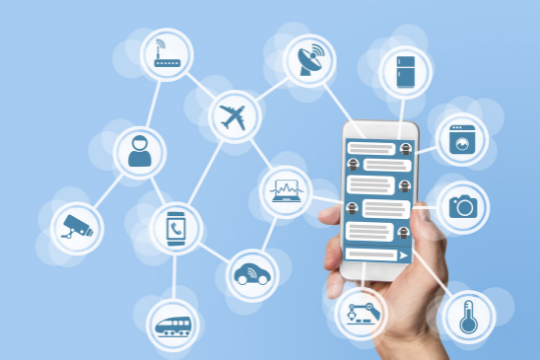 The Internet of Things offers a plethora of fancy new ways to connect devices, apps and services. This vast network holds incredible promise for users worldwide, especially in terms of personal wellness. This is true regardless of the segment analyzed: health, fitness and wellbeing; connected home; or smart cars and transport services. Yet not all devices are equally easy to use, so how do we ensure that they are designed to be used by human beings? What will the experience of using these devices be like, and what factors may influence it?