
Trendiest News in Tech

How to Write a Mobile App (Build Your Mobile App)

We are living in the era of the digital world where mobile apps become the essential needs of every business. Nearly every brand, every company, and every product has an app. In this article, we will discuss the best strategy to write a mobile app (build an app).

There are some essential steps that you need to follow to build an exceptional application.

Let’s discuss these steps one by one.


Write a mobile app with a step-by-step process


Choose the name of your app

The name of your app helps the users to locate your app easily. The app name somehow portrays the picture of your business. We would suggest that if you already have a well-established business then you should continue with the same name, it will help your existing users to place their trust in your app and can easily find you. For a new business, you have the freedom to choose any good name of your app but keep in mind that the name should reflect the image of your brand, be easy to remember, easy to pronounce, and have global appeal.


Select the color scheme

After choosing the name of your app, the next step is to choose the color scheme. Choose the most attractive, clear, elegant, and eye-catching colors. Make sure to choose the colors that suit your business. For example, if your company or organization for which you are building an app is a healthcare center, it does not quite make sense to use a darker color scheme with black. Instead, you may go for an app design that incorporates a lot of red and white, or blue and white. Do not use too much color in your app, and always go with two to three colors.


Customization

The customization step is very essential. Better and elegant customization makes your app more attractive and can increase the traffic of your app. Customize the design of your app in a truly unique way. To do better customization, you should work with an aesthetic approach. First, you should focus on the app icon, splash screen, and background. If you have your business logo then use your logo instead of the app icon. If you do not have a logo then create your app icon. The app icon should be simple and eye-catching. Do not use too much color on the app icon and remember to not lose your theme in the midst making your app icon as eye-catching as possible.

The background of the app and splash screen are very crucial, so choose a simple and attractive background according to your app. The splash screen is the introduction of your application. The first thing that the user will notice on your app after opening it is the splash screen, so work on it to make it as nice as you can.

Secondly, focus on app layout and fonts, The layout of your app mainly means the way all the elements in your app are laid out. This is more than just aesthetic. The layout panel of your app will decide whether your app is useful or not. Choose the best of the best app layout that will attract the users. Next thing to consider is whether your app has a readability factor. Make sure that your fonts should be simple and easy to understand.


Install your app for testing

After creating your app, the next step is to check how your app looks like on an actual device. This is one of the most essential steps for you because here you will see the results of your effort. You can check whether the app is useful for your audience or not. You can also check if your app needs any changes or improvements. After this step, your app will become available for your users.


Why is it better to design the app with the help of an app development company?

Many reasons define that designing a really good app can be done easily with the help of an app development company. Let’s discuss some of these reasons.

The app development company provides you with the already built UI/UX templates. This can save you loads of time. You do not need to learn to program if you are partnering with a reputable software development firm. App development firms provide you with the best custom-built features that can make your app development journey easy. They provide you with complete guidance and assistance.

We hope this guide helped you realize how simple it is to write a mobile app, once you have your concept and development tools figured out.

Sunvera Software develops next-level software applications from start-to-finish. Schedule a free 30-minute call with us to discuss your business, or you can give us a call at (949) 284-6300.

Five Reasons Why You Need a Brand App

According to Statista, 85% of people use smartphones in the United States and this percentage is increasing gradually. In this article, we will discuss five reasons why you need a brand app for your business.

As we know that this is the era of the digital world, and every day modern technology is spreading its wings around the world. Every business and company is adopting the new world of digital technology. Many business owners are shifting their business to the online world. Nowadays, the online presence of a business or any company is very much essential. If a business has its app then it leaves a great impression.


You might be thinking that an app is not important for a small business but that’s not true. An app is even more important for a small business for its growth and betterment. Let’s discuss the top 5 reasons that will define the importance of an app for a business.


Increased online visibility of your business

Smartphones have become the basic need of every person. Every person spends a lot of their time on their smartphone. Every minute people try to find new functions and applications in their smartphones. If your business has its application then people can see it while scrolling, and if it is attractive then people will download your business application. This will be very good for your business promotion. The online visibility of your business will be increased and your business will attract more appealing customers.

You can even engage your customers by adding promotional and sales offers to your app. In short, your business can become a brand and its growth can be doubled by having a new brand app for your business.


Increased customer loyalty

Having a proper business app can increase the trust of your customers. Your customers will become loyal to your services and products. The mobile app allows your customers to directly communicate with you, and the mobile app also allows your customers to give their feedback. The promotional offers, sales, and ads on your app will highly engage your customers.

Let us say there are two amazing restaurants. One restaurant has its app but the other restaurant does not have an app. So think for a moment, which restaurant would be good in terms of customer loyalty and sales? A restaurant that has its online presence is 100 times better at attracting and retaining customers than the other.


Can be a marketing channel

In this digital era, what is the best marketing strategy? You might be thinking of appointing salesmen or placing roadside banners, and arranging ad space vehicles. You are right but all these are old methods and strategies. Online promotions are the best way to promote your business in this era. A mobile app is no doubt one of the best marketing channels that can easily grow your business. Push notifications, news feeds, and promotional offers are the best options available in an app.


Profit can be raised

There is no doubt that mobile apps can easily generate sales and your profit can be doubled. We have a practical example with the Domino’s pizza app. When dominos launched their mobile app, their sales increased by 28% and now, 50% of their business is running through their mobile app. This is the power of a mobile application. You cannot imagine how much the value of your business can be increased by with the help of an app.


Increased accessibility

It is nearly impossible to reach the target clients at the same time at different places. One of the major benefits of a business mobile app is that it offers greater exposure on different mobile devices at any given time. Having said that, you as a business owner can send a discount/offer push notification to your customers anytime. You do not need to take a printout of your promotions and distribute them physically. Now you can send your sales offers through your brand app. The app can make your business life much easier.


Sunvera Software develops next-level software applications from start-to-finish. Schedule a free 30-minute call with us to discuss your business, or you can give us a call at (949) 284-6300.

One-Page eCommerce Site: How to Create One

eCommerce websites are online portals that allow people to buy and sell goods and services over the internet by exchanging information and money. Anything that requires a transaction can be done online easily. A term that has been used quite a bit lately in the online retail world has been ‘one-page eCommerce site’. What is a one-page eCommerce site and how is it used?


Purpose of a One-Page eCommerce Site

In general, an eCommerce website allows an organization to operate almost fully online, avoiding the need for a home office with sales and management personnel. The procedure is made easy, which sets it different from other websites that still focus on company development. A one-page ecommerce site allows you to display all your products on one-page, which makes the site a lot easier to manage and helps customers see all products from one view.


One-Page eCommerce Site: Different Kinds of Sites

  • Enterprise-to-enterprise (B2B) The framework of the business-to-business eCommerce model is exactly what it sounds like.
  • Business-to-consumer (B2C).
  • Client -to-client trades (C2C).
  • Client-to- business (C2B).
  • Website including a single brand.
  • Retailers of the internet
  • Websites where you can earn money as an affiliate.


Top 5 eCommerce Websites

  • Daraz
  • Shopify
  • Ali Express
  • Amazon
  • oLx


Gain of eCommerce Websites

eCommerce and drop shipping are profitable. And this is the perfect tool to make money in a short time with little effort. It’s time to start working for a living.


Relevant Pros and Cons of eCommerce Websites


PROS


  1. Wider Market

With eCommerce, you can also be able to control the clients from the whole world online comfortably. Clients may shop from any place at any time, and more individuals are getting presented to buying on their cell phones.

  1. Get a review of clients and suggestion

When your store is fresh and no one trusts it immediately because they consider that it may be a scam, getting reviews of clients make your store trustworthy. When any buyer visits your store, he observes the reviews on the products. Sometimes clients also give a review and sometimes the seller must manage them by asking people to review his product. There is an approach to follow your traffic and customers’ entire client excursion to get bits of knowledge about watchwords, client experience, showcasing messages, evaluating methodology etc. and the sky is the limit from there.

  1. Fast response to the customer according to the market trends

The improvement in coordination, particularly for “outsource” traders, permit firms to respond rapidly to advertise and web-based business advancements, just as shopper demand. Traders can likewise make limits and advancements on the fly to draw in clients and increment deals.

  1. Lower Cost

With the development of web-based business stage innovation, it is currently easy and reasonable to establish and deal with a minimum investment business website. Vendors at this point don’t need to spend a major measure of cash on Adverts or signs, nor do they need to stress over staff or land costs.

  1. More Opportunities to “Sell”

In an actual store, dealers can just present a restricted amount of item data. Web-based business sites, on the other hand, empower more data to be incorporated. (ex. demo recordings, surveys, client tributes etc.)

  1. Customized Messaging

Vendors can give nitty-gritty information and item suggestions to enlisted clients utilizing internet business stages. By showing the most significant material to every guest, these designated messages can help upgrade change.


CONS


  1. Lack Of Personal Touch

A few groups favored the quality assistance they get when they visit an actual store and draw in with salesmen. Clients need to purchase the product as well as have an incredible encounter at the same time, hence an individual touch is particularly indispensable for organizations offering top-of-the-line items.


  1. Lack Of Tactile Knowledge

Purchasers can’t contact or feel an item regardless of how great a video is created. Not to mention conveying a brand insight through the two-dimensionality of a screen, which can habitually include the feelings of touch, smell, taste, and sound, is no simple work.


  1. Cost And Product Comparison

Customers may think about an assortment of items and pick the best arrangement by buying on the web. Therefore, numerous traders are compelled to contend on value, restricting their overall revenue.


  1. Need For Internet Access

This ought to be obvious, however, remember that your customers will require Internet availability to shop with you! Since numerous online business frameworks contain highlights and functionalities that require fast Internet access for a compelling client experience, guests with helpless associations might be overlooked.


  1. Credit Card Fraud

For internet businesses, credit card theft is a real and rising issue. It can result in a chargeback, resulting in revenue loss, penalties, and a bad reputation.


eCommerce Website Development

The bulk of business owners, salesmen, entrepreneurs, and most commercial businesses invest their money in installing an eCommerce website to turn the competitive advantages of online shopping into a constant revenue source through a competent eCommerce online store.

Clients can discover, analyze, and buy desired products or services online in seconds by using their smartphones, tablets, and PCs. Deciding to invest time, effort, and money in the eCommerce website development process is a rational decision for increasing your business growth with more sales and higher profits.

In terms of advantages of online buying, eCommerce websites provide several other competitive benefits, including but not limited to:

  1. Expanding your business’s reach by focusing on several local and international markets.
  2. Increasing sales volume and attracting more potential clients with a professional online eCommerce store that is available 24 hours a day, 7 days a week.
  3. Tracking and monitoring customer behavior (i.e., the attention of your eCommerce website consumers) to tailor your items and marketing efforts.
  4. Using remarketing efforts to increase up-selling and cross-selling opportunities.
  5. There are limitless business opportunities generated daily once you have a professional online store built to suit your business demands and goals when it comes to the benefits of eCommerce website creation.


5 Steps for One-Page eCommerce Site Development


STEP#1

Choose your plan and sign up.

STEP#2

Decide how you want to create your site.

STEP#3

Connect your domain.

STEP#4

Set up your e-commerce website, products, shipping options, and payment

STEP#5

Market your ecommerce website.


Shopify Development Step-by-Step

Shopify is an online website tool that providing the platform for developing e-commerce store. You have to pay only some dollars yearly for using their services. By log into this platform online and you can start to design your store. If you are not able to do this you can also hire any freelancer for this task.


STEP#1

Sign up for a Shopify account.


STEP#2

Get to know your way around the Shopify admin dashboard.


STEP#3

Select your Shopify theme from default and premium options.

You may test and review changes to your distributed subject, so that you can attach as many pages as you need to your Shopify account, contingent upon the package you select.


STEP#4

Add your items to the list.


STEP#5

The main option for designing and building your store is drop shipping. You can also upload your products manually by adding their pictures and prices. But you also have the choice to import products from any other online store. To do this, attach the app extension in your Shopify store by which you can export products from the following stores:

  • Ali Express
  • Alibaba
  • Amazon


STEP#6

Add all relevant app extensions to your store. These applications serve many purposes, including providing customer support, importing products, reviewing imports, and maintaining the dealings and tracking system of your order. In the Shopify online store design, some apps are also free. You can also buy some premium apps for more accurate results.


STEP#7

In this step, you have to add the payment method for clients during online shopping. Customers can pay through any method that is very useful and helpful. Go to Payment suppliers in Settings and deactivate any installment suppliers you’ve empowered. Then, at that point go to Accept Visas – > Add a supplier – > Third-party charge card supplier – > Provider – > other – > Bogus Gateway – > Continue – > Activate the entryway.


STEP#8

In this step, you analyze the store by placing the order and check the payment method and shipping detail. It is beneficial because you can get the idea about your store as a client experience and observe any error you face by placing an order.


STEP#9

Go live with a custom domain name.

Now all you must do is add your domain to Shopify. Then you will be ready to go live with your business. You will need a domain name (your website address) to be found by visitors and search engines, just like any other website. And you are all set!


As you can probably tell, creating a one-page eCommerce site is a very simple process. Anyone can do it from anywhere at any time. However, if you are in need of advanced services to set up and run your eCommerce store, you can always partner with a reputable eCommerce development firm to help get your store up and running in very little time.

How Augmented Reality is Used in Different Industries

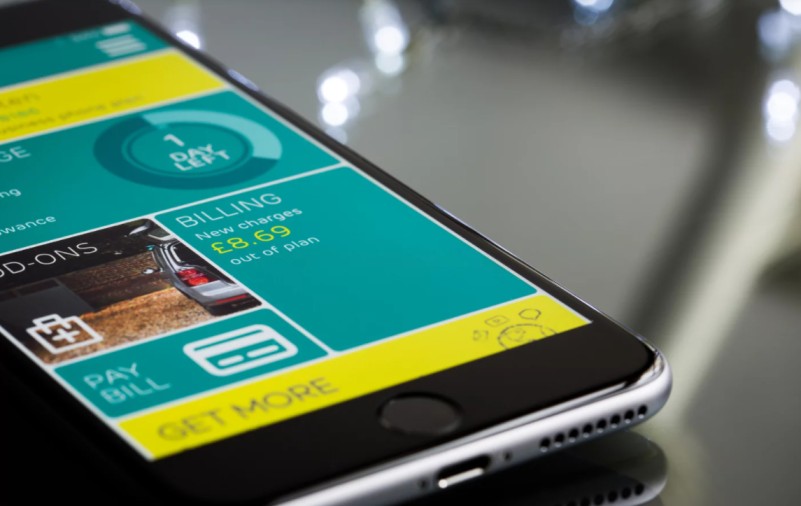
Augmented Reality (AR) is one of the biggest technological trends of the decade and will evolve as smartphones and other AR-enabled devices become more available worldwide. AR allows us to see real situations right in front of us – trees rocking in the park, dogs running behind the ball, children playing football – with a digital supplement on it. For example, a pterodactyl can land on trees, dogs can mix with their cartoon brethren, and children can fly past an alien spacecraft on their way to a scorching goal.

With the development of AR technology, these examples are not much different from what can already be available for your smartphone. Augmented reality is easily accessible and used in a variety of ways, including Snapchat lenses, apps that help find a car in congested parking, and a diversity of shopping apps that permit you to try on clothes even from home.

According to the latest report, by 2021 there will be about 1.96 billion users of mobile ARs worldwide. And by 2023, their number will expand to 2.4 billion AR customers.

The most commonly used AR is on the smartphone: users can activate this and open a camera, see the real world about them on the display, and use an AR application to advance the world in any way with digital overlays, including:

  • overprinting of images, digital information, and/or 3D models
  • adding real-time instructions
  • inserting inscriptions
  • adding color changes
  • changing the user’s appearance or environment with “filters” on Instagram, Snapchat, and other applications.

Uses of Augmented Reality in Retail and Sales

Innovative trends now have a significant impact on the brand’s marketing strategy. Augmented reality has developed as an innovative mechanism that empowers brands to collaborate with purchasers on their movable devices. AR creates a new digital experience that enriches consumer-brand relationships and can be used anywhere, whether it’s a PC at home, mobile devices, or kiosks in stores.

Vendors have to depend on print promotion campaigns or other media to promote properties. Divided in the past, print, media, and retailing efforts in stores are now collected into a complete consumer experience with augmented reality.

Integration of the added reality in marketing efforts is aimed at building relations with consumers, increasing sales, and increasing the value of purchasing experience. Retailers can reach their target audience through a variety of traditional and non-traditional interactions.

  • The added reality can improve navigation through the warehouse when it comes to large spaces and large quantities of items.
  • Creating virtual retailers of any size allows you to be closer to customers without the cost of inventory and long queues.
  • Gamification added to physical products helps attract customers to the product and works as an incentive to buy faster.
  • Demonstration of the product may not have such high pressure as the pitch situation, but it is still possible to sell.
  • AR-enabled store windows entertain potential buyers and make them wonder what is inside.


Uses of Augmented Reality in the Food Industry

Restaurant owners constantly try to attract their customers by offering them something innovative and memorable.

  • The added reality in the food inventory business is an additional support system for companies. With AR-based special inventory management tools, staff can quickly check and update food stocks by simply scanning barcodes and inventory using an AR application.
  • Many restaurants today have their AR-applications that allow customers to view menus in 3D projections. With these applications, you can quickly select your favorite dish from the menu. When a client comes to the restaurant, he can open the application and view all the menus in 3D.
  • If the client wants to know more about a particular dish on the menu, he does not need to call the waiter. Instead, the client needs to open the AR application and scan the menu; The application will provide complete information about any dish. From total calorie to nutrient content, everything can be learned in just a few clicks.

Interestingly, one 2017 study showed that 73% of restaurant visitors agree that restaurant technology can improve their customer experience. So maybe it’s time to put technology into your F&B business.


Uses of Augmented Reality in Hospitality and Hotels

In recent years, augmented reality has become an important concept in the hotel business, as it allows hotels and other related businesses to improve the physical environment. Augmented reality gives the hotel business unlimited opportunities for interaction with the guests. By presenting a virtual tour of the hotel before getting a room, the customer will have a classic image and expectation in mind.


Famous hotels around the world use AR-brochures to showcase their rooms and facilities to potential guests. Guests can see their apartments and all features before reserving for vacations (i.e swimming pool, route, institution, and sports center). This will increase the satisfaction and the number of reservations, as the guest will have a better idea of what his stay will be.

  • Each guest is special and should be treated with special attention. But sometimes, the hotel staff cannot always do it the way the guest wants. For this purpose, hotels use advanced AR such as Google Glass to solve this problem. Using Google Glass, employees can see important details about guests.
  • Every hotel should have an application where guests can be able to get the latest information about the hotel. For example, the guest can command their cellphone in any direction within the hotel and get information about such things as service problems, cleaning updates, swimming pool or spa directions, etc.
  • Each room has a map of the surrounding area. When a guest directs his smartphone to the wall, he can get information about the nearest sights. AR also helps guests find comfort easily.


Uses of Augmented Reality in Tourism and Travel

The traveling and tourist industry is a very analyzed segment. Clients of the tourism industry frequently arrange their programs by seeking views on their mobile phones. The search for data and information does not stop even after arriving at the destination. All of the information about their favorite place is collected through a mobile phone.

AR can complement the exploration activity by giving interactive and engaging news. With today’s mobile apps, these advanced features can be made available to travelers, making them easy to search for and trust.

Even the tourism specialists have estimated that with AR it is possible to create different user experiences that can be a blessing for the tourism and travel industry. When you proceed on tour to a city like London or New York, where there are countless charms, you can naturally miss an attractive site. The AR applications for tourism can allow travelers to discover more of these targets.

Nowadays, guests know where they want to go. People also search all their locations where they want to go on their smartphones. However, augmented reality can improve people’s touring movement with interactive animations, presenting them more properly. Travelers like the possibility to use exciting, easy to use and useful navigation methods.

The travel industry is the creation of exclusive experiences, and AR has the prospects to support this business sector. Technology can encourage tourism with new client service styles. It is presumed that soon AR will entirely change the business pattern of the tourism sector.


Uses of Augmented Reality in Education

AR is increasingly used in educational institutions, often to help students learn complex subjects. Another application of the augmented reality in education is the teaching of all information through virtual reality.

Although AR and similar technologies like VR are becoming increasingly popular in education, less than 10% of schools currently use AR in class, according to Project Tomorrow. Among the reasons for the slow implementation of AR in education are the following:

  • Unwieldy AR equipment
  • Concerns about academic value
  • Lack of adequate funding

AR provides opportunities for teachers to help students learn abstract concepts. Using the interaction and experimentation that AR technology offers, teachers can improve classroom experience, teach new skills, inspire students’ minds, and engage them in learning new scientific interests.

Students’ involvement and interest increase when they can participate in the creation of educational content.

An interactive learning environment provides opportunities to implement practical approaches to learning that can increase engagement, improve the learning experience, and force students to learn and practice new skills.

Sunvera Software develops next-level software applications from start-to-finish. Schedule a free 30-minute call with us to discuss your business, or you can give us a call at (949) 284-6300.

What is Software as a Medical Device? (SaMD)

The medical devices industry covers a wide array of applications and modalities. Generally speaking, the Food and Drug Administration (FDA) oversees the safety and efficacy of new devices that are placed on the market by issuing guidelines and regulations.

Based on the perspective of medical device manufacturers, this article highlights the most important aspects of this document. A newly proposed categorization framework is included with the new guidance on SaMD that clarifies how existing regulations can be applied. 

There are three main categories of medical device software:

  • A “software as a medical device (SaMD)” is a computer program that serves as a standalone medical product as well as software
  • Software used in medical devices (SMDs). This includes software that’s implanted in medical equipment, as well as software that’s part of medical products
  • A software accessory for a medical device


Definition and Scope of SaMD

It is predicted that SaMD, or Software as a Medical Device, will continue to grow in the clinical environment.

Medical management software as a service (treatment, monitoring, prevention, diagnosis) helps an individual with his or her medical needs, (e.g., monitoring blood pressure and diabetic control, apps for medical use, clinical information systems).

In the International Medical Device Regulators Forum (IMDRF), international regulatory convergence for medical devices is accelerated. Representatives of Australian, Brazilian, Canadian, Chinese, European, Japanese, Russian, Singapore, South Korean, and US medical device regulatory authorities serve on the committee. 

A consensus was reached through the IMDRF as to which types of software would qualify as medical devices. Since software as a medical device (SaMD) is regulated differently in each country, manufacturing strategies and availability are affected by this. 

History

The top 10 healthcare error incidents were analyzed in 2007 by the Swedish Medical Products Agency, Läkemedelsverket. When the software was at fault, it was noted that medical data was commonly lost, the wrong patient was prescribed medication, the wrong dosage was calculated, patients were not warned that they were allergic to an active substance, etc. A patient had died due to the software in several cases. 

Läkemedelsverket investigated and determined that several healthcare software products qualified as medical devices but had not been subjected to a conformity assessment or been CE marked. 

Software-only products were also regarded by EU regulators as being medical devices long ago, but it had not been obvious that the term ‘device’ applied to something intangible like software.


Software as a Medical Device

A SaMD is a form of software that performs a medical function without being part of a hardware medical device, according to the IMDRF. 

The term italicized is not to be confused with the physical location of the software, but rather with its legal status. Even though the software runs on cloud computing equipment, it can also be run on the hardware platform of a medical device and still be SaMD. 

The software cannot be classified as SaMD if it drives the hardware or serves the intended medical purpose- but it can be classified as part of a medical device in the regulatory meaning of the word. An ultrasound device, as an example, has software that can be used for automatic nerve detection. 

If a manufacturer wants to attribute the claim of nerve detection to the ultrasound device or only to the software, it can place such software on the market as SaMD. However, software that doesn’t have its own medical purpose is not SaMD. 


Examples of Software as a Medical Device

“Software intended for one or more medical purposes without being part of a hardware medical device.”, is the FDA’s definition of software medical devices, adopted from the 2014 International Medical Device Research Forum report.

If the software’s intended use is to power a medical device, it does not meet the definition of SaMD. While SaMDs may be integrated with any physical device, they must run on general computing platforms (or mobile devices) and may be used with any other medical device.

Some examples of SaMD devices are:

  • Using a digital camera’s accelerometer, the software attempts to diagnose a condition
  • MRI and other types of medical imaging can be viewed on mobile devices with special software
  • Image-processing software that detects cancer by analyzing images
  • Information-supply applications for treatment planning
  • Regulation software for medical devices, such as pacemakers
  • Heart rate monitors and BMI calculators


Sunvera Software develops next-level software applications from start-to-finish. Schedule a free 30-minute call with us to discuss your business, or you can give us a call at (949) 284-6300.

Doctor Appointment App Features

Do you always have patients lined up in your waiting room? The appointment booking process has not been managed appropriately if this appears to be the case.

It is likely that medical appointment software will be able to rectify this problem. Your staff and patients will appreciate this tool, whether you choose an app or web-based platform. It is no doubt excruciating for those who are crammed into tiny rooms with the COVID-19 pandemic raging.

Here we will go over why an online doctor appointment booking system was developed and why patients demand one, including how your business can meet your customers’ expectations.


Benefits of a Doctor Appointment Booking App


There are two benefits to using apps to schedule doctor appointments. First, they allow patients to easily arrange meetings with their preferred healthcare providers. A second benefit of these systems is that all appointments and data are kept together under one roof.  

Here’s how it works in the real world:

  • From the perspective of the patient. Using an app makes scheduling an appointment easier than ever before. With just a few clicks or taps, patients can schedule an appointment with their doctor at a time that is most convenient for them. Both you and your patients benefit from saving time.


  • From the perspective of a clinic. Apps and web-based platforms are used for clinic booking system software. You can focus your staff on more important tasks (such as entering patients’ personal information, scheduling doctors’ schedules, handling paperwork) by automating appointment booking. 


  • A hospital appointment management app or a web platform can reduce unused time slots when a hospital appointment management system is implemented. You could lose money if there are no-shows or cancellations.


  • Apps are also useful for tracking revisits and improving communication between patients and clinicians from the patient’s perspective. Appointments can be scheduled, cancelled, and rescheduled more easily.


Doctor Appointment App: How Does It Work

An app helps you keep no-shows at bay by setting reminders and notifications. It is also possible to reschedule back-to-back appointments immediately in case patients miss their appointments, thereby avoiding a loss of profit due to an unused time slot.

In addition to preventing overlapping appointments, clinics can develop a scheduling system. A solution that automates the booking process can help prevent double bookings caused by human error.

Pandemic turmoil makes this all the more important. Your waiting room should be as empty as possible for social-distancing purposes.


Doctor Appointment App Features


Patient profiles

Patients’ information should be easily accessible to doctors before, during, and after appointments. This information is best stored in an app. A doctor can use it to retrieve any information about a patient (name, age, medical records, treatment plans, insurance information, etc.) before an appointment.


Doctor profiles

A patient’s first connection with a doctor is through an app. It’s important that physicians’ profiles are clear and comprehensive. Photographs, core competencies, and experience will help patients make an informed decision. As well as consultation fees, consider including treatment costs.


Notifications

You should consider implementing reminders and notifications in your hospital appointment booking app in order to reduce the possibility of unused time slots. By sending them notifications before scheduled appointments, patients can confirm appointments in advance, reducing the risk of missed appointments.


Booking form

If possible, arranging medical appointments could be as simple as using a website or app to schedule an appointment. The appointment booking process should be simple for patients once they select a physician and time slot.


Medical records

Keeping patients informed about the progress of their treatments and giving them access to their test results is always a good idea. Including an ‘upload’ option will allow them to share diagnostic scans with their physicians.


Electronic prescriptions

Refill requests can be requested directly through the app by your patients. This really helps patients and you both save time and money by eliminating the need to travel to your clinic. Pharmacies in the network will then be able to provide refills.


Payments

Making patient consultations and treatments pre-payable is particularly convenient. Your no-show rate can be reduced if you include this feature in your app, since paid appointments hardly ever turn into missed ones.


Telemedicine

Out of all the doctor appointment app features, this one is especially important. It is definitely worth it to include telemedicine in an on-demand doctor appointment app despite the increasing costs. Offering online consultations lets you reach patients who cannot attend face-to-face appointments.


Directions

When you have multiple locations, directions are vital. Your app or web platform can conveniently provide directions to your nearest clinic so that patients can find it easily and get directions. Directions provide a straightforward way to find a medical facility, combined with hours of operation and contact information.


How to Create a Doctor Appointment app: Step-by-Step Guide

Rolling out an app is one thing, but making it scalable, fail-proof, and ready for thousands or millions of users is another.

So, don’t approach the problem piecemeal. To transform your clinic’s pride and joy, make sure all of your steps are intertwined.


Step 1. Research

Let’s be honest: if you develop an app for patient appointments, you won’t be a trailblazer. Therefore, learning from your competitors’ mistakes is in no way a bad thing. They could even become assets for you.

During the research phase, you should:

  • Take a closer look at the apps of your competitors
  • Compare and contrast their pros and cons
  • Don’t miss out on opportunities
  • Consider the needs of your patients when implementing this strategy

In order to move forward with the app development process, you can now use your findings of the research.


Step 2. Planning

Here you determine the features you want incorporated into your app as well as the technology to rely on. Developing a roadmap requires meticulous planning and setting milestones to remember.

It is important to check your local laws at this point as well. It is imperative that patient information is appropriately protected since doctor appointment solutions use their personal information. Your software should be protected from flaws and vulnerabilities with encryption technologies.


Step 3. Design and prototyping

You are now moving into the next phase of an evidence-based plan. Prototyping and designing your product should include the following:

  • Your app’s visuals should include colors, patterns, and other elements
  • Create a user interface
  • Build a user-friendly booking system
  • Make sure you include all the clickable options in your menu
  • Make it compatible with Android and iOS

You don’t have to make it picture-perfect at this point. This can be a good place to start gathering feedback.


Step 4. The testing process

Patients should ideally try out doctor appointment apps before they are built. The purpose of this is to determine if the MVP is intuitive for both parties and if any tweaks need to be made. You can improve your patients’ experience by asking them for some feedback.

In addition to testing usability, we also need to test stability and security. To test whether the app can withstand real-life scenarios, it needs to simulate extreme load conditions.


Step 5. Launch

Your app will be ready for release once you have finished the final improvements based on feedback. Uploading your app to the app store is not the end of the process.

It is equally important to maintain your app. Technical glitches shouldn’t detract from the patient experience, and while adding new features is okay in the future, you don’t want to stop adding them now. A killer app must be updated regularly, especially in the healthcare field.


Now that we have gone over the top doctor appointment app features and the steps involved in the process, you can start brainstorming how you will build your medical app.


Sunvera Software develops next-level software applications from start-to-finish. Schedule a free 30-minute call with us to discuss your business, or you can give us a call at (949) 284-6300.

Pros and Cons of Native vs. Hybrid Apps

Apps seem to be everywhere nowadays. Our everyday lives would not be complete without them. However, while we may see apps as a simple icon on our screens, they are seen as a more complex piece of software for app developers or investors considering a business app. The question of whether to develop an app or ask for one to be developed is in fact a big one. One of the main issues is whether to develop native vs. hybrid apps?

There are many pros and cons to both native and hybrid mobile apps. Which one should you choose and why? This question cannot usually be answered precisely. There is no perfect solution. The best choice depends on the need, timeline, budget, and developer’s expertise. 

The purpose of this post is to explain the differences between a hybrid mobile app and a native mobile app and how either can benefit your business. 

So let’s begin.


Pros and Cons of Native vs Hybrid Apps


Why is it important to consider? In the end, app development is all about the user, and as we’ve already touched upon, apps and mobile devices are a part of our everyday lives. Therefore, it becomes as important to make the user experience responsive and reliable. Bad user experiences are not acceptable. 

App development solutions vary in their experience for users, so choosing which route to take is important.

As a blend of native and web apps, hybrid offers a better and more cost-effective alternative to native, providing a good combination of performance and user experience. 

There are some new approaches to native app development…


Simplicity vs. complexity


Let’s say that you opened an online food delivery business, and customers can order food through your app. The app should be made as simple as possible and should not have any complex functionality or features. 

You can, in this case, opt for a hybrid development model since there are no complexities involved.

In addition, there are many native food ordering apps since the owners of these businesses refused to compromise on quality in any way.


Games and apps with complex features


You have already mapped out the features you want to add in the future to your mobile game and plan on developing it. Native development is the best choice in this case because more functionality can be added to the app in the future based on user feedback.

It is worth mentioning that hybrid development approaches are used in few games. The hybrid approach to app development is used even for complex retail apps.

Facebook is a good example. In 2012, Facebook became fully native. Users still complain about slow speed after having native Facebook apps.


Pros and Cons of Native Apps


Developing a native application – an app that is developed specifically for a mobile platform, such as iOS or Android, using Objective-C or Swift code, is the best path for custom software development. These languages are used by operating systems (OS) and are developed using their integrated development tools (IDEs). 

As a result, the app can be built using OS guidelines, which will provide users with more features and a better user experience. The look and feel will be familiar to users, which will make it easier for them to adopt the app-defined gestures. 

An app that runs natively is one that complies with all the guidelines of an operating system. On your phone, you can use native apps such as a camera and messaging. 

Furthermore, native applications offer optimal performance because they can be tailored to the device’s features, such as the camera, microphone, or GPS.


Pros of Native Apps

  • By distributing native apps through App Store app stores, visibility and support are improved. 
  • The features and guidelines of the operating system, as well as built-in capabilities, allow native apps to perform better.
  • Due to their familiarity with the user experience, native applications are easier for users to use. 
  • Accessibility has improved, resulting in a more personalized product. Customers are thus more loyal to you. 
  • To place the native app in the app store, the software must pass QA and security checks. 


Cons of Native Apps

  • Programming skills in complex languages are necessary for creating native apps. 
  • Hybrid and web applications cost less upfront than native applications. 
  • It may not be advisable to use simple applications. 
  • The development of native applications can be affected by platform upgrades.


Native apps, even though typically more expensive to develop, are more economical in the long run due to their speedy performance and user-friendly interfaces (UIs).


Pros and Cons of Hybrid Apps


A hybrid app consists of both native OS and web applications. They are useful due to their native capabilities and multiplatform capabilities. The application is primarily built with HTML, CSS, and JavaScript. Hybrid apps load code using a web view rather than a native shell.


Pros of Hybrid App Development

  • It is not necessary to use a web browser to run a hybrid app. 
  • Hardware and APIs are available to them. 
  • There is only one codebase to maintain. 
  • You can maintain consistency across multiple platforms with consistent UI language.


Cons of Hybrid App Development

  • Hybrid apps suffer from performance issues due to loading in webview as well as being much slower than native apps.
  • A third-party platform is needed to deploy the app’s shell. 
  • A native app can lower costs, but customization can increase costs. 
  • It is likely that issues will come up in both native and hybrid environments, making it difficult to resolve bugs. 
  • A hybrid app is often less user-friendly than a native app


As businesses adopt hybrid apps, mobile development is transforming. Business people are keen on hybrid mobile solutions as they are quick to develop, cost-effective, and have expected results. It has certain limitations but is good to a certain extent. 

Today, hybrid apps allow developers to take advantage of the advantages of both types of applications. Despite hybrid apps’ limitations, developers are finding more ways to work around these challenges as technology advances.

Now that you learned a little bit more about native vs. hybrid apps, its time to get developing!

Sunvera Software develops next-level software applications from start-to-finish. Schedule a free 30-minute call with us to discuss your business, or you can give us a call at (949) 284-6300.

Cloud Technology Trends 2021

Digital transformation played a major role in 2020. Global pandemics forced everyone, not just website developers and programmers, to go virtual. Cloud computing became increasingly relevant with the digital shift, and there are several cloud technology trends that are taking over the tech world by storm.

Currently, cloud computing is flourishing at a rapid clip, with more and more companies embracing the technology. Consequently, research by Research and Markets estimates the industry will grow from $371.4 billion in 2020 to $832.1 billion by 2025.


What Is Cloud Computing?


Data has been stored and protected by companies for decades, working to protect confidential information. In the early days of cloud computing, firms and individuals used the technology to store and process data securely. Cloud storage is used by many companies in many fields. 

A dynamic application and storage model based on cloud computing is now simply called computing. 

Cloud computing has five major characteristics


  1. The self-service option on demand
  2. A wide range of networking options
  3. A resource pooling approach
  4. Flexibility with rapidity
  5. Measured service. 


In addition, cloud computing includes three major types of services


  1. Service-oriented architecture
  2. Service Platform
  3. Service-based software. 


Furthermore, there are four different ways to use cloud computing: 


  1. Public cloud
  2. Private cloud
  3. Community cloud
  4. Hybrid cloud.


Current Trends in Cloud Computing


A major benefit of cloud computing is that it allows businesses to meet clients’ needs while enhancing their competitive position. The ability of these organizations to store data efficiently and effectively has led to a demand for greater storage capacity. 

In response, online data center capacity must be increased by service providers. To remain competitive, cloud computing has become an integral part of sustaining superior performance. 

Firms are positively impacted by a greater availability of storage space, since it allows them to store more information. In addition to storing and analyzing customer information, these large data pools provide companies with useful insight into their preferences, desires, and behaviors. 

As cloud computing fees decline, smaller companies can also store and share data through cloud computing.


Future Trends in Cloud Computing


Cloud computing service providers receive payment from organizations using cloud computing services. Global multinationals are developing their own proprietary cloud networks. 

Rather than rely on general service providers, these very large companies provide their own private clouds. In Coca-Cola’s case, the company has a lot of data that can be used to create a private network with high security tailored to their specific requirements. 

A major multinational company such as IBM has developed a private cloud storage service. The cloud is also expected to be developed by other multinational firms.

The vast majority of large companies have an IT department. Companies can outsource their IT departments by allowing cloud service providers to customize the cloud to meet their needs as cloud providers develop more complex offerings. 

IT departments and elaborate computers will no longer be a necessity for companies. In addition, IT employees need to be able to manage cloud-based applications. 

Eventually, smaller companies and private individuals will join large companies in taking advantage of cloud computing as it becomes commonplace and user-friendly.

Online social networks are becoming increasingly dependent on mobile cloud computing.

The company offers e-business services, including gaming, image processing, video processing, and general Internet services. Mobile cloud computing was highlighted in several generic surveys. 


Quantum Computing Trend


Quantum computing challenges the existing state of cloud computing and might completely transform it. It is one of the hottest topics in the cloud industry. 


Hybrid Cloud Solutions Trend


Hybrid cloud solutions will join the list of other predicted cloud computing trends very soon as well. 

In addition, hybrid cloud solutions can adapt to the changing market needs, and are known for their dynamic nature, cost effectiveness, and flexibility. 

In light of the rise of competition by large-scale enterprises, hybrid cloud solutions offer the ability to meet these market demands.


Automation Trend


It’s becoming increasingly necessary for organizations to adopt cloud computing, which means more computing power and more data and application resources. Time-consuming and tedious administrative tasks would be required. 

In addition to reducing repetitive work and increasing productivity, automation will also reduce errors. All companies should automate their processes, regardless of their size. Cloud administrators’ jobs will be simplified by automation, resulting in cost-savings and time savings.


Cloud Technology Trends For Companies


Companies’ current and future needs will be met by cloud computing trends.

Cloud computing allows companies to access and store their data at any time. 

The cloud computing industry has become very popular because of this feature. Over time, service providers are hoping to provide more services, including enhanced analytics services. There are many benefits to using cloud computing and cloud storage services. 

Data security is of utmost importance. Data will increasingly be stored in the cloud as more and more businesses contract with service providers for data analytics. 

Further, cloud data storage will become a necessity for companies in the near future. Competition in the business world will be largely dependent upon the availability of shared and accessible data.

In order to fulfill organizations’ needs and desires, companies require reliable cloud computing environments. The ideal scenario would be for enterprises to develop plans to enhance how they use cloud computing. 

To facilitate users’ use of the cloud, Internet service providers will enhance the speed of the Internet and reduce the time that computers are offline. Those companies that do not take part in this initiative will likely experience a reduction in competitiveness. 

Sunvera Software develops next-level software applications from start-to-finish. Schedule a free 30-minute call with us to discuss your business, or you can give us a call at (949) 284-6300.

How Virtual Reality is Used in Different Industries

Virtual Reality (VR) is a computer-generated atmosphere with views that look original, offering the user to feel engaged in the surrounding place. VR empowers us to involve ourselves in video games as if we were one of the roles, (ex. learn to execute heart surgery, or improve the quality of sports training to achieve maximum results).


The emergence of AR and VR has radically changed industries such as healthcare, real estate, and even finance. This field of application is expanding at a rather impressive pace. By the end of 2020, the AR and VR market reached $150 billion, and AR will defeat VR at $120 billion.


Uses of Virtual Reality in Retail Industry

Creating a productive business environment begins with the process of hiring. Investing in virtual and augmented reality technology gives HR managers a unique set of tools to attract, train, and retain the best candidates for the job.


The design and layout of the retail store includes a surprisingly large amount of actual science. There are many benefits to using a virtual environment instead of experimenting in real physical space. These include:

  • No heavy shelves to be moved from place to place
  • Much less time is required for the transition to the new layout
  • VR eliminates time and space constraints and allows retailers to reach a wider audience. Virtual stores also allow customers from more remote areas to access their favorite brands and products.
  • VR provides full immersion, with stores and goods displayed in front of the user in three dimensions, on virtual shelves of the virtual store. When a product is in front of them, consumers can get a more accurate idea of its appearance and style.
  • VR allows retailers not only to strengthen their online business, offering a completely immersive, real-world experience, but also promote their brands and products among buyers.
  • Virtual stores allow buyers to explore a vast range of goods, and enable retailers to reach customers in remote areas without requiring new physical stores or additional staff. A virtual guide, which is an optional virtual store function, provides detailed information about the products and their production, thus eliminating the need for additional staff.


There are many advantages of virtual reality technology in human field resources and the training of personnel. It can also significantly help in the marketing and promotion of the company.


Uses of VR in the Real Estate industry

Virtual reality tools are only now becoming an effective communication and marketing tool in the real estate sector. More capital is invested in virtual and augmented reality technology, as this technology has the potential to significantly impact the real estate business. Virtual tours and technologies of virtual production can benefit both potential buyers and developers. For this reason, real-estate market players eager to be ahead of everyone, should consider implementing virtual reality. VR technology also allows for virtual production. In other words, using virtual reality technology, real estate agents can show potential buyers a fully furnished space, even though it is empty in real life. VR applications are saving time for both the buyer and the seller. In addition, VR technology is very convenient for the end-user. Any real estate investor can benefit from this because it helps both to find and retain tenants.


Uses of Virtual Reality in the Healthcare Industry

Modern medical training has shifted from fact-learning to evidence-based training to developing the right patient management strategy. This type of training includes problem-oriented training, communication skills, and VR-based training.

Virtual reality is useful in pre-planning complex operations such as neurosurgical because it helps the surgical team review the entire operation and rehearse the planned intervention. Any medical situation can be modeled with VR so that students can deal with it as in real life. Thereafter, feedback and stocktaking should be provided so that they can learn from their mistakes if any. The cheap VR systems and the fact that teachers are not required make access more flexible and broad.

Computer graphics allows the recreation of any part of the body in the smallest detail with the utmost accuracy to reality. Moreover, the training can be conducted using scenarios that accurately simulate common surgical situations.

Understanding how real-life fractures occur and worsen is very useful for orthopedic surgeons in the training process. Simulation-based VR training is a very effective method of transferring skills to future laparoscopic surgeons.


Uses of Virtual Reality in Fintech

Businesses, including financial firms, are trying to integrate many of these technologies into their services, although there is still time before VR really makes a living in many industries, including finance. Some companies turn trade into a virtual experience, creating virtual reality workstations for trade. Citi uses Microsoft Hollow Lens to provide holographic workstation traders. This type of workstation offers 2D and 3D elements that complement the existing processes of the bank. Commerce uses virtual reality in its welfare management software to give users better access to algorithms and trading tools.

To create a more secure client experience, biometric security can be implemented in a VR system, which can then be connected to the VR world. This can be used for access to VR banking services, ATM operations, or payments.

Digital banks and mobile banks are here. But someday, soon, they will be able to visit the virtual bank. If clients cannot visit the physical branch of the bank for any reason, they will soon be able to contact the virtual branch. It is hoped that these offices will be able to provide the same services, but only in a VR environment.


Uses of VR in the Food Industry

In today’s rapidly changing world, the food industry must rise to the occasion and use its full potential to ensure the quality and convenience of consumers. One new way to meet the need for modernization is virtual reality. People can easily find the topic they’re interested in, in a matter of seconds.

Moreover, virtual reality allows creators and marketers to demonstrate their food beyond physical reality.

Information can easily be disseminated more easily through the use of virtual reality. Companies can instruct graphic artists and editors to create video clips and interactive games to better represent their products.

Thanks to careful experience, consumers can become more attached to the product, which will force them to return next time. It will help to keep existing customers and make it easier to attract new ones. A virtual space that will help people with interest immerse themselves in the world of cooking can transform the food industry.

Creators can use real photos as references for 3D models included in the virtual world. A virtual assistant can be an additional feature of virtual reality to help you learn skills.

Personalized training materials contribute to better customer engagement. With these, customers can change language, voice quality, color intensity, and more to maximize learning efficiency.

These capabilities help make VR more inclusive, enjoyable, and fun than paying for online cooking lessons.


Uses of Virtual Reality in the Travel industry

Virtual Reality is effectively changing the travel industry. As a hotel or travel company, you can present a different experience to clients using VR technology on your site or in downloads. With VR, people can use their iPhone or Android phone to move closer to places that are impossible to visit in real life, such as closed cultural heritage sites or ecologically fragile landscapes where no one is allowed to go.

In these cases, VR applications can be the only way for the densely populated world to get to know some of the greatest wonders of the world from afar.

Moreover, the disabled and the elderly will also use VR travel, because, although their condition does not allow them to independently see sights, they will still be able to see them through lenses.


Uses of Virtual Reality in Games

Using a virtual reality device provides a perfect experience of traveling in space and time without actual movement. You feel entirely detached from your body but still connected to your piercing heart when virtually descending from a mountain on slalom or exploding into space.

Devices such as Oculus Rift and Samsung Gear VR are now delivering such experiences, and those seeking a low-budget alternative have Google Cardboard. But so far, most of the talk and work relating to VR has focused on games, and it is easy to see why. Gamers often try to immerse themselves in the game as much as possible. But technology has applications that go far beyond the intensification of battles in Call of Duty and Advanced Warfare.

The companies involved in gaming have started to create more immersive solutions that attract more and more new users.

VR’s gaming space increases business costs with this new disruptive technology. Virtual reality gadgets are becoming increasingly popular among gamers. Moreover, VR awareness is steadily promoting among users and players. After the launch of the VR headset market, the gaming industry began a change and revolution.

Sunvera Software develops next-level software applications from start-to-finish. Schedule a free 30-minute call with us to discuss your business, or you can give us a call at (949) 284-6300.

How the Internet of things (IoT) is Used in Different Industries

The Internet of Things (IoT) is a system of interconnected, Internet-connected objects capable of collecting and transmitting data over a wireless network without human intervention.


Personal or business opportunities are limitless. A “thing” may mean a connected medical device, a biotype transponder, a solar battery, a connected car with sensors that warn the driver of many possible problems (fuel, tire pressure, maintenance, and much more), or any object equipped with a network that can collect and transmit data.

When something is attached to the Internet, it indicates that it can send information or collect information, or both. This capability to send or receive information performs things quickly and perfectly. In the Internet of things, objects can be divided into three categories:

  1. Sensors that receive data and then transfer it.
  2. Computers that receive information and then operate according to it.
  3. Things that do both.


IoT uses in Real Estate


The Internet of Things (IoT) has breathed new life into the real estate industry. The annual growth of the market on which buildings equipped with advanced technologies are built or improved is 20% yearly on a platform that improves or redecorates homes with the special abilities.

IoT is a chain of smartphones, tablets, processors, devices, and utilities that interact in real-time. Smart buildings reduce operating costs, are more environmentally friendly, provide continuous data on the daily life of the facility, and attract digital-oriented buyers or tenants. Buildings connected to intelligent devices allow property owners and building managers to remotely control temperature, lighting, HVAC, building security, outdoor cameras, sprinkler systems, and additional utilities. Large office buildings get information using the Wi-Fi fingerprint and user movement to understand pedestrian traffic around the facility.

Asset capture views a commercial building as a repository of current data from which to visualize new services that can better serve the lessee. For example, cameras can record parking occupancy of a building and identify free spaces that the lessee can detect using a paid application.

The IoT market in terms of consumer spending on smart home systems around the world will reach $157 billion by the end of 2023. Costs and investments in IoT will grow due to efficiency gains, lower costs, and the absence of a human factor.


IoT in Fintech


As in many other industries, we also see the Internet of things in the financial market. The impact of technology on financial markets has already led to changes in customer service, security, payments, internal transactions, and infrastructure.

Fintech is teaming up with IoT and artificial intelligence to challenge banks to provide immediate support to clients. Smartphones can act as beacons, alerting customer managers at financial institutions when the customer comes to their branch. In this way, financial companies can quickly offer support and save customers time. According to Microsoft’s report, 95% of customers worldwide note that customer service is an important factor in brand selection. Customer service is also crucial in finance. IoT applications in financial services can also be used to improve customer service. Using intelligent, context-sensitive devices, the financial industry can optimize customer service by sending personalized messages, welcoming customers when they appear, etc.


IoT in Banking and Finance


IoT can affect conventional banking market means such as KYC, lending, insurance authority, trade finance, salaries, PFM, and security. Incorporated with other developing technologies, such as digital licenses and smart contacts, IoT can create new P2P business models that can disrupt banking in several areas.

The Internet of things in the financial industry is also transforming the way payments are made. Non-removable smart devices replace smartphones and traditional credit cards when making wireless payments and withdrawing cash.

Banks will identify the meaning of the channel and will be able to perform proper contextual services or guidance, improving the experience of communication. Biometrics, whether sound or touch, can allow account access on these new digital channels “everywhere.” In processes asking for a physical signature, you can apply “Wet Ink” technology as the customer can remotely pay using any touch screen equipment. It will eliminate limitations linked with personal, paper deals, and enable customers to do business even when they cannot be physically present.


IoT in Food Industry


The Enhanced Radio Frequency Identification System (RFID) ensures maximum transparency in the food supply chain, helps automate delivery and shipment processes and effectively monitors and controls temperature. It also allows shippers to track the location of the product using GPS. By gathering meaningful data, shippers can assess performance in several areas, including understanding customer behavior and reducing the “dead” miles in car parks.

IoT enables brands and manufacturers to improve the visibility of a specific food product path from the source or manufacturer to the retail store shelf.

Smart transport containers and refrigerators allow you to remotely control the storage conditions of your products. Any changes to storage conditions can be detected quickly, greatly simplifying the troubleshooting process. Advanced and intelligent containers for storage and transportation allow maintaining consistency of food quality.


IoT in Agriculture


The application of IoT in agriculture can be fatal for mankind and the whole planet. Smart agriculture is a broad term that combines farming and food production methods using the Internet of things, big data, and cutting-edge analytical technologies. When we talk about IoT, we usually mean adding sensing, automation, and analytics technologies to modern agricultural processes. The most popular IoT demands in smart agriculture are:


  • Sensory systems for monitoring crops, soil, fields, livestock, warehouses, or an important factor affecting production.
  • Smart agricultural vehicles, drones, autonomous robots, and execution mechanisms.
  • Connected agricultural premises such as smart greenhouses or hydroponics.
  • Data analysis, visualization, and management systems.


By handling soil and crop sensors, drone monitoring, and field mapping, farmers better surmise the relationship between crop health and status. Using connected systems, they can produce the best quality crops and increase the nutritional value of the product. UAVs or just drones have also gained popularity in the industry. In most situations, drones serve as IoT-based monitoring operations in agriculture, as devices for mapping fields, spraying, and handling pesticides on demand.


IoT in Healthcare Industry


Health is one of the most important industries because of the complexity; level of responsibility, and strict rules etc. Innovation has a long way to go before it is fully established in this field.

  • Telemedicine: The medical Internet of things, combined with mobile applications, is a completely new model of communication between patients and doctors, even between doctors and doctors.
  • Non-portable devices that transmit data directly to doctors: Most often it is about watches, tapes, bracelets, and other trackers, which collect important information about the patient’s condition (heart rate, blood pressure, pulse, blood sugar, etc.) and send it to hospitals or doctors directly for analysis and correction of treatment.
  • Diagnosis, preventive medicine: Patient maps, test results, treatment progress, and other data that IoT can collect are important to improve diagnostics accuracy and stimulate the development of preventive medicine.


IoT in Manufacturing


The Internet of Things (IoT) enables producers to increase efficiency, reduce waste, and increase profits. IoT is a proven strategy, emerging trend, and innovative technology. More importantly, IoT enables manufacturers to increase efficiency, reduce waste, and increase profits.

As the connected device ecosystem grows, as more corporations adopt its technology, it still has a competitive edge. Now is the time to take advantage of IoT. Connecting production devices and aggregating the resulting data allows manufacturers to reduce overhead costs, save resources, increase profits, and optimize operational efficiency. There are many ways IoT can help optimize production: Inventory control and supply chain management help companies become more efficient. But one of the most significant achievements made by IoT is energy management. Monthly utility bills usually arrive about two weeks after the end of the calculation cycle. They often indicate energy consumption for entire plants. Although this information may be convenient for the financial team, it does little to identify waste or reduce consumption.


Sunvera Software develops next-level software applications from start-to-finish. Schedule a free 30-minute call with us to discuss your business, or you can give us a call at (949) 284-6300.

Ready to discuss your project? Contact Us